My daily environment consist of a support system which include my husband, kids, and my mother. These people have supported me for years in many of my decision making. In fact my mother is the reason for me being in the Early Childhood Field. I have recently relocated to Mississippi. I have been in Arkansas my whole life. This city is very new to me and there is no familiar faces.
I am at home while the kids are at school and my husband is working. There are many days in which I feel alone and sad. My husband tries to cheer me up and our youngest son gives me many compliments. My mother and I have also had a close relationship. She is also very supportive.
Support is a very important factor toward becoming successful in life. I believe that life would not be as fulfilling without support from my immediate family. It makes a big difference just to hear encouraging words sometimes. I truly thank God for placing them in my life. Now more than ever I must believe that this city will begin to feel more like home. The support has turned into determination. It is left up to me create an inviting environment and to find a job of my interest.
I have recently gone on two interviews and both jobs weren't up to my expectations. I did not feel like this is it. One day I just know it will happen for me!
Friday, October 12, 2012

Sunday, September 30, 2012
"My Connection to Play"
“For a small child there is no division between
playing and learning; between the things he or she does ‘just for fun’ and
things that are ‘educational.’ The child learns while living and any part of
living that is enjoyable is also play. ~ Penelope Leach (psychologist and
author)
“It is in playing, and only in playing, that the
individual child or adult is able to be creative and to use the whole
personality, and it is only in being creative that the individual discovers the
self.” ~ D.W. Winnicott (British pediatrician)
“Children learn as they play. Most importantly, in
play children learn how to learn.” ~ O. Fred Donaldson (martial arts master)


These items allow children to use their social skills, cognitive development, gross and
fine motor skills. Children are also use real life materials which are used in
their homes. The sand and toys allows
the boy use his thinking skills to build by recalling his memory about the
material.
During my childhood my mother brought toys pertaining
to my interest. I mostly recall having a play kitchen, doll houses, and many dolls.
I loved to play dress up. I believe back then many people did not associate
play with learning. I played with many materials which helped be to use my
social skills such as the kitchen and doll house. The different material allowed
learning communication among my peers.
Play is very similar today as it was yesterday. Yet
there are much more learning materials available to children in terms of
learning. There are so many puzzles and games today that require children to
think and be creative.
I see play as a learning experience for children no
matter what age. There are so many thing children can learn through play that
they will acquire in their adult lives. Everybody needs to know how to communicate
and be social. In life many of us have
to use our thinking skills on our jobs. Different materials are used in our
homes.
Sunday, September 16, 2012
Relationship Reflection
I believe that positive relationships are important whether it involves children, family, co-workers, or friends. My relationships with my own children and family is ongoing. I have always had a close relationship with my mother.The relationship with my children is most important especially at home.
My two boys

My Mother

Positive Family Partnership is becoming more and more demanding in early childhood programs. A child's relationship in their environment determines their outcome in life. Often I try to make my have feels warm and welcoming for my children as possible. We have family time every week whether its reading, watching TV, playing games, eating out, or talking. A mother's relationship is unlike any other. Parenting involves positive relationships in which challenges can develop. Listening and understanding are important factors concerning relationships.
I have experienced that challenges occur during miscommunication and not being understanding. As educators we must get involved with our students learning, home-life, and their families. I have learned a lot from hands on experience in the classroom. My own recent challenge was making sure that my children are comfortable in all environments. I recently relocated and I was so worried about my children being in an environment with no fomular faces. I imagined how they were feeling constantly. Now I go and eat lunch with them read, books to their class, and try to stay involved.
My work experiences has help me to gain insight on different types of relationships. I have also learned how to build positive and effective relationships with parents. The interaction between a teacher and child is very important in that it encourages the child to talk, develop social skills, and creates a warm and friendly environment. There so many learned experiences throughout my time in the classroom environment. It is a everyday learning experience involving teacher, director, children, and families.
My two boys

My Mother

Positive Family Partnership is becoming more and more demanding in early childhood programs. A child's relationship in their environment determines their outcome in life. Often I try to make my have feels warm and welcoming for my children as possible. We have family time every week whether its reading, watching TV, playing games, eating out, or talking. A mother's relationship is unlike any other. Parenting involves positive relationships in which challenges can develop. Listening and understanding are important factors concerning relationships.
I have experienced that challenges occur during miscommunication and not being understanding. As educators we must get involved with our students learning, home-life, and their families. I have learned a lot from hands on experience in the classroom. My own recent challenge was making sure that my children are comfortable in all environments. I recently relocated and I was so worried about my children being in an environment with no fomular faces. I imagined how they were feeling constantly. Now I go and eat lunch with them read, books to their class, and try to stay involved.
My work experiences has help me to gain insight on different types of relationships. I have also learned how to build positive and effective relationships with parents. The interaction between a teacher and child is very important in that it encourages the child to talk, develop social skills, and creates a warm and friendly environment. There so many learned experiences throughout my time in the classroom environment. It is a everyday learning experience involving teacher, director, children, and families.
Thursday, June 21, 2012
Children Quotes
I really like this kid poem because I am sure all of our children have said they
were sick to stay home from school.
I cannot go to school today" Said little Peggy Ann McKay.
"I have the measles and the mumps,
A gash, a rash and purple bumps.
My mouth is wet, my throat is dry.
I'm going blind in my right eye.
My tonsils are as big as rocks,
I've counted sixteen chicken pox.
And there's one more - that's seventeen,
And don't you think my face looks green?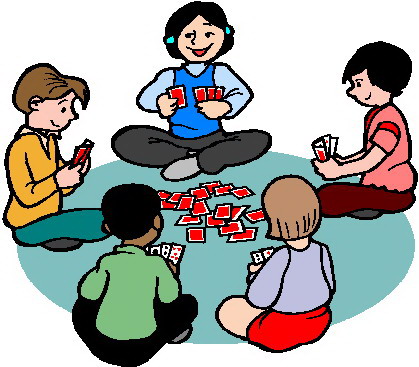
My leg is cut, my eyes are blue,
It might be the instamatic flu.
I cough and sneeze and gasp and choke,
I'm sure that my left leg is broke.
My hip hurts when I move my chin,
My belly button's caving in.
My back is wrenched, my ankle's sprained,
My 'pendix pains each time it rains.
My toes are cold, my toes are numb,
I have a sliver in my thumb.
My neck is stiff, my voice is weak,
I hardly whisper when I speak.
My tongue is filling up my mouth,
I think my hair is falling out.
My elbow's bent, my spine ain't straight,
My temperature is one-o-eight.
My brain is shrunk, I cannot hear,
There's a hole inside my ear.
I have a hangnail, and my heart is ...
What? What's that? What's that you say?
You say today is .............. Saturday?
G'bye, I'm going out to play!”
― Shel Silverstein
"I have the measles and the mumps,
A gash, a rash and purple bumps.
My mouth is wet, my throat is dry.
I'm going blind in my right eye.
My tonsils are as big as rocks,
I've counted sixteen chicken pox.
And there's one more - that's seventeen,
And don't you think my face looks green?
My leg is cut, my eyes are blue,
It might be the instamatic flu.
I cough and sneeze and gasp and choke,
I'm sure that my left leg is broke.
My hip hurts when I move my chin,
My belly button's caving in.
My back is wrenched, my ankle's sprained,
My 'pendix pains each time it rains.
My toes are cold, my toes are numb,
I have a sliver in my thumb.
My neck is stiff, my voice is weak,
I hardly whisper when I speak.
My tongue is filling up my mouth,
I think my hair is falling out.
My elbow's bent, my spine ain't straight,
My temperature is one-o-eight.
My brain is shrunk, I cannot hear,
There's a hole inside my ear.
I have a hangnail, and my heart is ...
What? What's that? What's that you say?
You say today is .............. Saturday?
G'bye, I'm going out to play!”
― Shel Silverstein
David Vitter, U.S. senator
"I continue to believe that if children are given the necessary tools to succeed, they will succeed beyond their wildest dreams!
Saturday, June 9, 2012
Testing Children Intelligence
Children are learning academically every day in a
classroom environment. Our society main focus is on our children academic capacities
which are very important. It is also important for children to learn about
themselves. I believe that it is important for children to learn about relationships
with others outside of their environment. Relationships involve social
development which prepares our children to communicate in the world as adults.
Reference
Holistic Education Inc. Retrieved from http://holisticeducation.net/vistors3.htm
I think that Head start assessment is developed
appropriate according to their age. The assessment is called ASQ3. It breaks
each section down according each developmental domain. The domains include
language, social, emotional, cognitive, and physical development. The
assessments are assessed according to the age of the child. The teachers assess
can assess the children in the classroom and on the classroom.
Assessment
in Scotland
Children in Scotland are assessed with a
computerized PIPS on-entry baseline assessment when they first start school at
age six. It measures cognitive development including early predictors of
reading, phonological awareness, math, and vocabulary. The PIPS Project
collects a large amount of data from children in England, New Zealand, and
Western Australia as well as from Scotland.
Seeds Sponsored Research: Children Starting School
in Scotland Retrieved from
http://www.scotland.gov.uk/publications/2005/02/20634/5/60/
Sunday, May 27, 2012
Child Abuse in Germay
There was a 3 year in my classroom that experienced
a very tradegic child abuse. During this time I was a new to the classroom and
was not educated on the signs of physical child abuse. According to Berger (2009) child abuse is a
deliberate action that is harmful to a child physical, emotional, or sexual
well-being. The child would come in with different injuries in which the signs
were there. She would cry whenever the
bus comes to take her home. Sadly the little girl died from a blow to the
stomach. I believe that the child’s death could have been prevented. As teachers it is our responsibility to have
called the child abuse hotline. I feel that the doctor should report the mother’s
several trips to the emergency room because of the child’s injuries. It has been about three years since the child’s
death and I still feel like someone could have helped. The mother’s boyfriend
was found not guilty and the mother is waiting to go back to court.
I read an article about Germany’s legalized child
abuse. Sex education begins as early as preschool in Germany. Adults often tell
little girls how the penis feels good to the vagina. Fathers give their
daughters’ vagina pet names. They have a non-optional curriculum which includes
helpful songs to teach preschoolers not to be afraid to masturbate. As
Americans all of this sounds very sick and weird. I cannot discuss this any
longer.
References
Dr. Judith Reisman (2010) Legalized Child Abuse in
Germany: Sex and the Preschool Child retrieved from http://www.drjudithreisman.com
Berger, K. S. (2009). The developing
person through childhood (5th ed.). New York, NY: Worth Publishers.
Saturday, May 12, 2012
Children Public Health
Nutrition is a very an important aspect in children
developmental growth. The US has a major problem with obesity because of poor
diets. Manila (2008) one out of 4 children are considered to be underweight in
the Philippines.
In response to the
anticipated food shortages, the Department of Education will expand its
school-feeding program and the government has repeatedly assured Filipinos of
stable rice supplies from both foreign and local sources. But with poverty
rates also on the rise, these initiatives may not be enough.
Government figures show that the income poverty rate increased to 33 percent in 2006, up from 30 percent in 2003, with the number of “food poor” Filipinos rising from 10.8 million to 12.2 million over the same period.
Government figures show that the income poverty rate increased to 33 percent in 2006, up from 30 percent in 2003, with the number of “food poor” Filipinos rising from 10.8 million to 12.2 million over the same period.
Anemia - a form of
micronutrient malnutrition caused by iron deficiency - is another chronic
nutritional problem for infants and young children. At least six out of every
10 babies aged between six months and one year are anemic, which is hardly
surprising since more than 40 percent of pregnant and lactating women suffer
from anemia too, according to FNRI statistics.
I learned that Pilipino is anticipated to have
shortage food supply like certain cities in Africa. I never considered the nutrition
problems which occur in the Philippines. In my classroom, the other teacher and
I plan a nutrition activity for the children each month. The nutrition activity
introduces a new and healthy snack which contains different textures and
colors.
Reference
Philippines: Nutrition Gains at Risk IRIN (2012)
Retrieved from
http://www.irinnews.org/Report/77822/PHILIPPINES-Nutrition-ga
Sunday, May 6, 2012
My Child Birth Experience
My first child birth was both exciting and difficult. The labor was very life threatening. Child birth is a very painful experience and yet something that I will never forget. My son was the first grandchild on both sides of the family. I took all the precautions of prenatal care. My heart rate drop drastically and all the medicine affected my baby and he was not breathing. My life flash before my eyes. I thank God that he spared my life and for a strong praying family. Yet I was very excited to see my baby. My husband and other members of my family was very supporting.
I believe that prenatal care is very important but also keep in mind sometimes things happen unexpectedly. In precaution it regarding a healthy growth of the fetus inside of the womb.
I have found that the women in Kenya child birth is very similar to American woman. The big difference is poverty and not being to afford the proper medical care. In Kenya their are more deaths during birth .
I believe that prenatal care is very important but also keep in mind sometimes things happen unexpectedly. In precaution it regarding a healthy growth of the fetus inside of the womb.
Traditionally, women in Kenya have given birth at home. In
this predominately rural culture, birth is a meaning-laden event not only for a
woman and her extended family but also for the entire community. Children are
viewed as a blessing, a gift from God. A pregnant woman is supported by older
women in the community and cared for by what is now called a traditional birth
attendant (TBA). While the value of TBAs has sometimes been debated, they
continue to play a vital role in the birth experience for most women in rural
African communities. In a country with 40% unemployment, a depressed economy,
and widespread poverty, medical care is often unaffordable or simply
unavailable—another reason why many women in rural, African communities turn to
TBAs for assistance in labor and birth at home.
I have found that the women in Kenya child birth is very similar to American woman. The big difference is poverty and not being to afford the proper medical care. In Kenya their are more deaths during birth .
Reference
J Perinat Educ. (2004) Birth and a Vision: Lamaze Childbirth
Education in Kenya, East Africa
Summer; 13(3): 27–30.
A Lamaze International Publication Doi: 10.1624/10581240X1743
Sunday, April 8, 2012
Course Resources
Other Sources
http//www.childrenyoungpeopleandfamilies.com
http://www.empoweringparents.com/
http://child-abuses.com/child-abuse-articles/child-abuse.com
This child abuse article give a very good desciption and actual pictures of children that have been abused.
Some Supporters of Children Literature
Natasha Tarpley Author of I Love My Hair!
Eric Carle Author of The Very Hungry Catepillar
Cynthia Rylant is also a supporter of children literature she has written over 60 books.
Sorry that I am so late but there was a death in the family. Everyone knows that death is always something difficult to handle.
Sunday, March 25, 2012
There are some motivational quotes that stood out in a video of professionals. Teachers have the opportunity to help shape a child's life. One of the professional's said that he look forward to working with children each day and being committed to the services he provide the children.
The professionals in the video all demonstrated passion. They explain their love for the Early Childhood field with compassion and inspiration.
The professionals in the video all demonstrated passion. They explain their love for the Early Childhood field with compassion and inspiration.
The words and inspirational quotes from Bronfenbrenner says that "A child needs the enduring, irrational involvement of one or more adults in care of and joint activity with the child. I believe that Bronfenbrenner was saying adults should be actively involve in the children school and other activities to grow and feel loved.
He also say that the action is in the interaction! Our action is shown in the way that we interact with our children.
He also say that the action is in the interaction! Our action is shown in the way that we interact with our children.
Sunday, March 11, 2012


Subscribe to:
Posts (Atom)